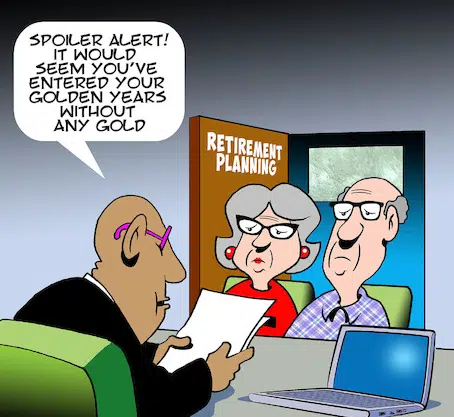

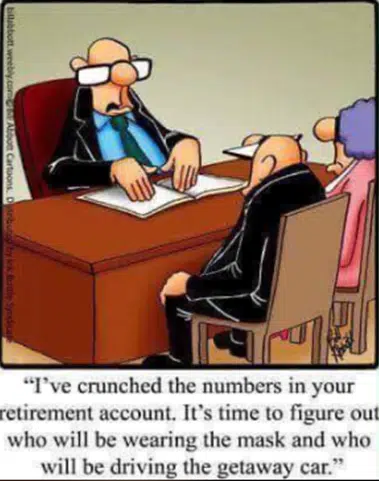
Sadly, the retirement crisis in America is no joke.
Keeping in mind, Retirement is a man-made myth (My book, Chapter 13) It has no Biblical support to work like crazy and then hope to live the last part of your natural life in some sort of special comfort (and not end up what you saved just to pay for all the medical needs you now need for all the years of hard work).
Most don’t want to hear this, but the red part is not all it’s cracked up to be.
- The Federal Reserve’s Survey of Consumer Finances shows that just 57% of households headed by someone between the ages of 55 and 64 had money in retirement-specific accounts.
- A AARP survey, 1 in 5 adults age 50 or older had no retirement savings at all. Data from the Survey of Consumer Finances indicates that only 9% of American households have managed to save $500,000 or more for retirement. For individuals in their 60s, the median 401(k) balance is $210,724, while the average balance is much higher at $573,624. This gap highlights how a small number of high-income households with large retirement accounts can skew the average, making it appear more encouraging than the reality most retirees face. So while $500,000 puts you ahead of the curve statistically, that context matters less when you’re facing 20 or 30 years of expenses stretching out in front of you.
- AARP says there’s been a major increase in seniors “unretiring” due to needing money or had a poor economic outlook. Basic expenses are the No. 1 reason older adults continue to work or job-hunt. The fear of running out of money is now more common than the fear of dying.
- The net worth Americans think they need to retire vs. the actual number
- Shocking to many, about half of all middle-aged Americans are “forced” to retire early. A greater proportion of working-age Americans are now over 40, and higher rates of chronic illness and disability onset are occurring during midlife, a period typically associated with peak earnings and career success. The financial consequences of forced early retirement can be severe. Many workers are unprepared to retire a decade ahead of schedule, and the situation is compounded by the fact that it typically takes two years from application to receive Social Security disability benefits, during which time individuals cannot work.
- I’ve written how I’m no fan of 401k’s and it was a dramatic mistake to end pensions for most.
Here is the median balance by age:
18-24: $2k
25-34: $16k
35-44: $40k
45-54: $68k
55-64: $96k
Over 65: $95k - For a 65-year-old couple retiring in 2026, estimated lifetime healthcare costs are closer to $330,000–$345,000 for basic expenses, with some estimates reaching over $660,000 for comprehensive coverage (excluding long-term care).
- Retirement And Aging Crisis – From Bad to Worse
- A record 111 million Americans can’t pay their credit-card bills in full.
- More Than Half of Credit Cardholders Are Carrying Debt Month-to-Month at Crushing Interest Rates

111 million Americans carrying revolving credit card balances at an average interest rate of 24.7% APR means the U.S. consumer is paying approximately $270 billion annually in credit card interest alone, money that EVAPORATES without building any Asset or Equity, whatsoever.