
Though the public storage industry itself has done nothing wrong, it is to me the “Poster-Child” for one of the many factors that have led many Americans down a very bad economic road.
In a society that use to always first asked, “can we afford it”, we now have gone to just “can we just make the first payment?”
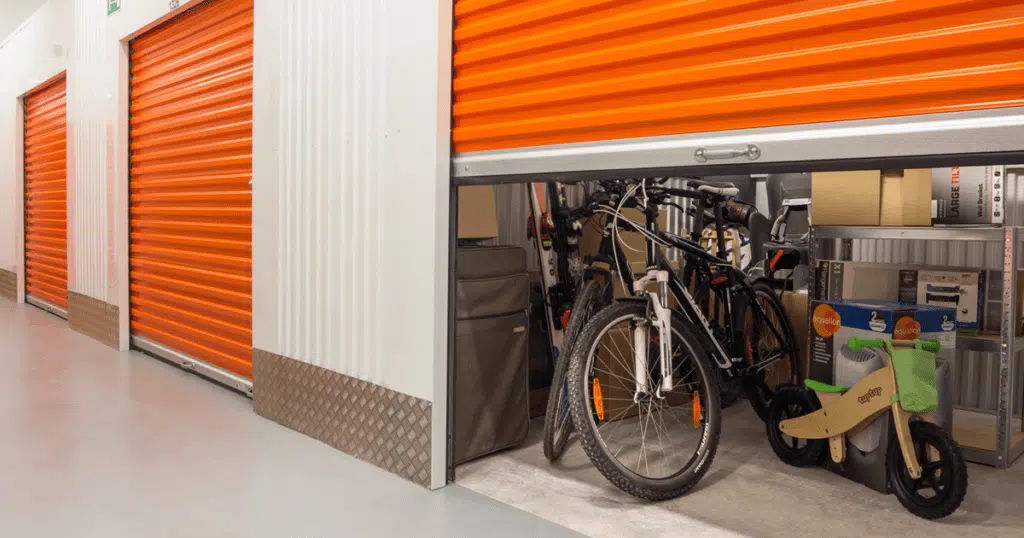
Our parents and grandparents lived in much smaller dwellings, but never needed what is now seen every couple of miles on roads all over America, “Public-Storage” (to keep what they couldn’t hold in their own households” and had far less “stuff” then we do now).
Public storage usage has grown significantly, with the U.S. self-storage market seeing increased revenue, a higher percentage of households using facilities, and greater average square footage per household compared to pre-COVID levels. This growth is driven by factors like shifting housing market dynamics, including smaller living spaces and rising property costs, along with major life events such as moving or downsizing. The overall industry is projected for continued growth, with strong demand and a high occupancy rate indicating continued expansion.
- The annual revenue for the U.S. self-storage market grew over 13% from 2020 to 2024, from $39 billion to an estimated $44.33 billion.
- The percentage of U.S. households using self-storage increased from 9.3% in 2019 to an estimated 10.2% in 2024, with expectations of reaching 16% within a decade.
- The average U.S. household now uses more self-storage space, 13.4 square feet in 2024, up from 12.1 square feet in 2019.
- Revenue in the overall global storage market is projected to continue growing significantly through 2030, with an expected CAGR of 8.77%.
- Self-storage facilities in the U.S. maintain high occupancy rates, with an average of 96.5% in 2024, showing sustained demand.
- Residential property prices have risen dramatically, leading to smaller living spaces and increasing the need for extra storage.
- People frequently turn to storage during major life changes such as moving, renovating, downsizing, or starting a business.
- Economic instability can also contribute to demand, as people may need to store belongings for personal or business reasons.
- A growing trend of migration to larger cities with smaller living spaces further boosts the demand for self-storage units.
The evidence suggests Americans possess and accumulate more items than needed, leading to widespread clutter and negative consequences for well-being and financial stability. Factors contributing to this phenomenon include cultural norms, easy access to cheap goods, online shopping, and the increasing need for storage, with self-storage facilities booming to accommodate the excess. This overabundance of possessions can cause stress, anxiety, and a sense of being overwhelmed, highlighting a significant societal issue.
- The average American home contains an estimated 300,000 items, and 44% of Americans feel overwhelmed by clutter.
- One in four two-car garages are too full to fit a car, and the U.S. has a vast network of self-storage facilities to house people’s belongings.
- Americans spend billions on non-essential items and even pay late fees on bills because they lose them, while the cost of managing clutter affects time and relationships.
- Owning many items is normalized, with media reinforcing the acceptance of clutter and even a market for professional organizers to address it.
- The abundance of inexpensive, low-quality goods makes it easy to buy more than is necessary.
- The 24/7 availability of online shopping and pervasive marketing contribute to a cycle of constant accumulation and consumption.
- Consumerism is a part of American culture, where purchasing goods can be a way to display success or stability.
- Some individuals buy things to alleviate stress or feel better, creating a vicious cycle of consumption and clutter.
- Clutter is linked to increased stress hormones, anxiety, depression, and a sense of chaos that prevents relaxation.
- Difficulty in managing finances and accumulating debt can be a symptom of having too many possessions.
- Everyday activities are made harder by cluttered spaces, making it difficult to find things and maintain order.
- Belongings fill homes and garages, sometimes spilling into extra storage units, reducing available living space.
- The $8 billion home organization industry has more than doubled in size since the early 2000’s—growing at a staggering rate of 10%
One man simplified the issue many years ago: